When you search “things to do in Armenia,” seven of the first ten results are monasteries. Each of my foreign friends who has come to visit and booked an organized tour outside of Yerevan will experience a kind of monastery fatigue. When I wrote for the Wizz Air magazine last year, my editor responded to my pitch saying, “Thank you for not trying to write yet another piece about ancient churches. There must be something else that can appeal to tourists.” I know that opinion might be unpalatable for some, but this is how most visitors interpret what kind of place Armenia is before they’ve even landed.
There is no shortage of experiences that travelers are looking for in Armenia, and those who’ve lived here for a few years can rattle off a list of strange and spontaneous stories with little prompting. But Armenia has a discoverability problem. Many of these experiences we tell people about abroad are not usually what you would find in a travel package or a “best of” list online, which means most visitors only end up discovering a fraction of what is actually here. At best, a standard tour itinerary will include a wine tasting and lavash-baking demonstration added to a circuit of monasteries. Visitors might partake in a few of these and then conclude, been there done that, there’s nothing more to see. Believe me, there’s no shortage of material in Armenia, but there is a vast disconnect in the way anyone finds out about it. So, how can we get people to see what we see?
Having spent a few years playing de facto tour guide to visiting friends, I can see why many plan their itineraries expecting to like our northern neighbor more. Most of them land here only because they had already committed to Georgia, and Armenia becomes a convenient afterthought. They consider Armenia as a place to squeeze into two days after doing the big-ticket items up north, usually multi-day hikes and vineyard hopping.
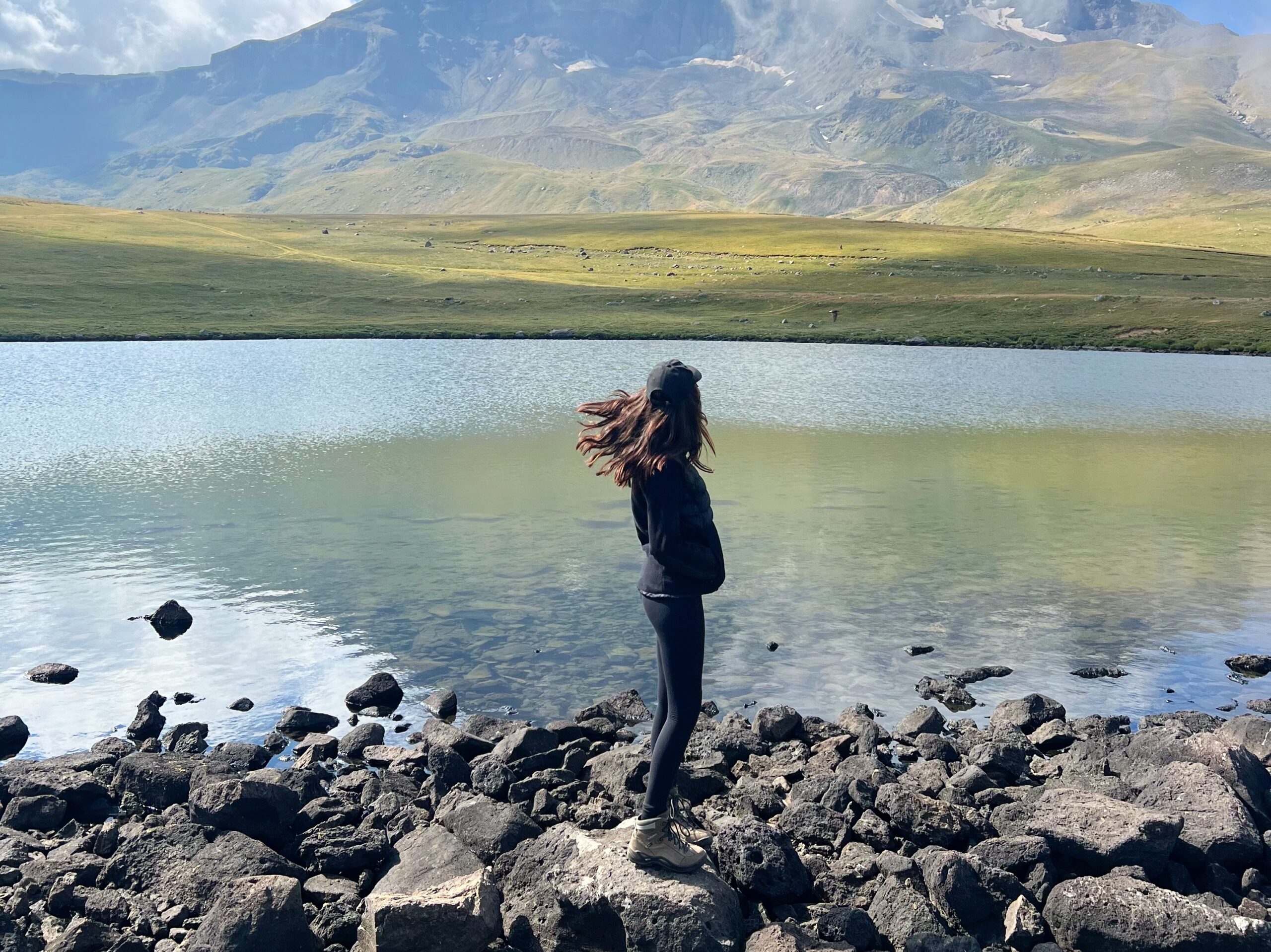
It’s a shame because, of course, Armenia has that and more. The woods, remote lakes and mountainscapes; scrambling up cliff faces; coming face-to-face with the country’s little-known wildlife; or even having to be rescued from a gorge — there’s something for everyone. I won’t indulge in the who-has-the-oldest-wine-making-heritage argument (Armenians, obviously), but while we aren’t (yet) known for the famed amber wines of our northern neighbor, there’s no shortage of interesting high-altitude, homemade blends and viticulture pioneers working to revive ancient grapes.
One recent visitor told me his reason for going up to Georgia was to see a well-known cave village. Sound familiar? I balked and said, “Armenia has plenty of those.” In the south, the last cave-dwellers in Old Khot were alive only one or two generations ago, and their descendants who live up the hill still call some of these caves and dugout plots their own, having gone back to plant the gardens outside them. My visitor had not heard of this or any of the others I mentioned, and that’s the problem.
Now, as more and more travel pathways open up for Armenia, particularly cheap flights to and from European cities, we should be more opportunistic in appealing to these intrepid travellers. Armenia is welcoming more visitors than ever. In 2025, the country pulled in more than 2.2 million tourists — more than four times the number that would arrive each year in the early 2000s, when most visitors were likely diasporans. The share of visitors with Armenian ancestry fell from 66 percent in 2013 to 35 percent in 2023.
While these numbers are promising, Georgia logged more than 5 million tourists in 2025, even though its population is only modestly larger than ours. People go for mountains and wine, which Georgia has turned into a global brand, spending much more money making sure everyone knows about it. Armenia spends about $1.70 per tourist, whereas Georgia spends up to $6 (Azerbaijan around $13), according to a story in EVN Report. Successive governments have banked on the idea that tourists would show up on their own. And to some extent they have, but they will rarely see the full picture.
Armenia has a glut of experiences that hardcore travelers want, granted they’re able to find a company to facilitate on Instagram, which is more often than not, where Armenian companies advertise, and are able to communicate with them with a translation feature that is unreliable at best on the social media platform.
Some of my own experiences I try to recreate for others involve swimming in limestone caves in the far south of the country; scoring an invite to a homemade khorovats by the gorge in Stepanavan; witnessing hundreds of bezoar goats picking their way across the cliffs above Noravank at dawn; jeeping up Khustup to watch the sun break through the cloud cover at 3,200 meters up; sharing coffee and gata with the others who had decided to picnic at the top of Dimats mountain as the fog rolls through the clearing; having a host decide to teach you stick shift on a Lada Niva halfway to a Silk road-era bridge; or the quintessential Armenian bed and breakfast: very generously fried eggs, with plates of herbs and cheese, after a night of trading stories and shots of homemade vodka with your host.
These experiences are technically for sale, if foreign visitors can stumble upon them and have enough know-how to organize and make them happen. But you might be asking: how do you even formalize something like this? Other success stories show it doesn’t have to be as unplanned as it seems. Look at Kazakhstan and Mongolia, the two countries that have built an identity around being an off-the-beaten track, adventure-first, spontaneous experience driven destination. That reputation might seem organic, as though it were something travelers discovered and passed on, but it’s the product of a deliberate strategy.
Thankfully, there is some promising investment to fix part of Armenia’s disconnect. Last year, the World Bank approved a $100 million loan for infrastructure across seven towns outside of Yerevan — including Areni, Dvin, Goris, Jermuk and others. This will draw tourists out of Yerevan, into wine, wellness and adventure clusters. A recently approved tourism strategy champions the same areas, including cultural, gastronomic and adventure tourism, focusing on pitching Armenia as a safe and hospitable place. Infrastructure and investment like this might make authentic experiences more accessible to non-Armenian visitors, when they don’t have well-connected friends to guide them around.
Perhaps there’s an underlying inferiority complex to this, that if someone comes from abroad, they must be shown only the things we perceive to be valuable to foreign eyes — the grandest buildings or the most famous landmarks. But this attitude skips over the beauty of Armenia’s offering.
But roads will only go so far; some of the attention needs to turn to the discoverability itself: understanding how people abroad find information they trust; making something searchable; listable and bookable in the languages that people are using; formalizing the informal experiences by helping hosts and micro-operators package and list what they offer — and help them see the value in what they do too. People often refuse to believe a tourist would want to visit a village for a basic meal, or would even be interested in what ordinary Armenians do everyday. Perhaps there’s an underlying inferiority complex to this, that if someone comes from abroad, they must be shown only the things we perceive to be valuable to foreign eyes — the grandest buildings or the most famous landmarks. But this attitude skips over the beauty of Armenia’s offering. Actually, there’s a lot Armenia has that other countries don’t, visitors just don’t know how to find it, or where to begin to look.